(Part Two in a series of pieces on my trip to Israel in December of 2024, hosted by the International Fellowship of Christians and Jews)
In my early twenties, I loved going to music festivals, alternative nightclubs, and raves. Lollapalooza was one of my favorite outdoor events of the summer. I’d go with a bunch of friends and dance under the stars, our disco ball in the sky. That was in Massachusetts, my home state.
A decade later I’d still be dancing, but all over the world. Different countries, cultures, and languages, under that same disco ball in the sky. Greece, France, Brazil, Italy, Amsterdam, Iceland… no matter where I travelled, music formed a connection. Bonding over beats, even if just for a night, strangers became friends.
Our olfactory sense, the sense of smell, is said to be the most powerful, enabling us to recall memories instantly. Sometimes music has that effect too. The first few chords of a track bring me back. Remembering the DJ compilation that got us all high the night we never took drugs. A group gathered, breaking beats like breaking bread and sharing an abundance of joy. Smiling, laughing, dancing, a universal connectedness. Music does that and the best DJs were symphony conductors leading us, like individual instruments, to a beautiful crescendo.
I think of this as I walk through the Nova festival site in Southern Israel in December of 2024. Hundreds of photographs memorialize the nearly 400 people slaughtered on the morning of October 7th, most of them young music lovers embracing a community I knew all too well. I think of this as I look into the pained eyes of a father, not much older than myself, whose son was kidnapped from the festival at age 20 (now 22).
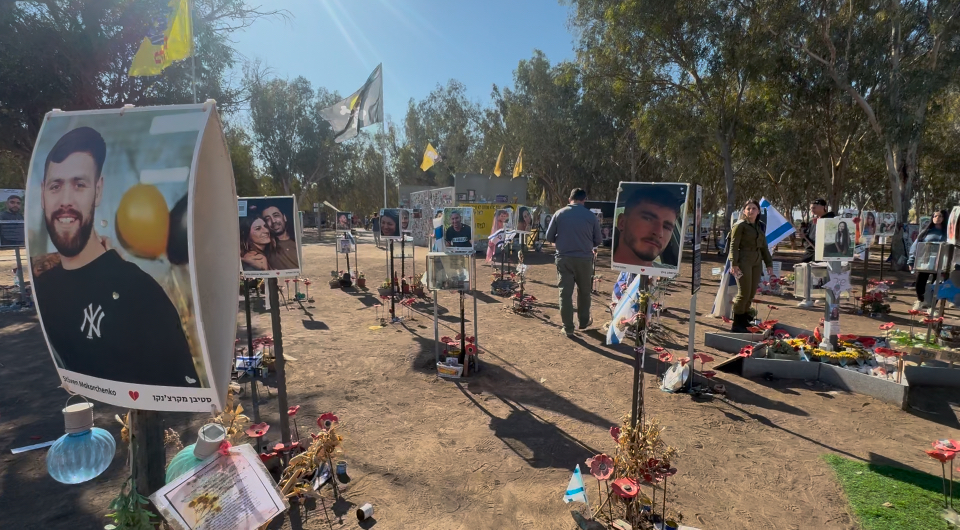
His son, an aspiring DJ, loved music and bringing people together. In music festival culture, DJs are leaders, with popular ones drawing a following from all over the globe. An incredible DJ has instincts like a jaguar, creating a set list that revolves around an acute awareness of the environment, building anticipation, and knowing just the right moment to lunge into a sprint — an intensity the crowd eagerly waits for and celebrates. As the father spoke, I imagined his son at the festival overcome by the music and in his happy place, and how, twenty years earlier, I could have been there too.
The faces on the memorials, their stories, reminded me of so many young people I’d met at festivals along the way. They were from everywhere, drawn by the pull of community, to collectively experience the elation that brings music and art lovers together, much like sporting events do, except they were all on the same team. Some Israelis described the festival to me as the Burning Man of the Middle East, and it was billed as a peace celebration of “friends, love and infinite freedom.”

After leaving the Nova festival site, we continued to another memorial, a vacant lot that contained a wall of destroyed cars, hundreds of them, some burnt beyond recognition, others riddled with bullets – symbols of those that did not escape. A bombed-out car, permanently parked next to an Israeli flag, was the centerpiece of the memorial. It is decorated with the national flower of Israel, the Calanit.
Our hosts tell us the bright red flower, which represents strength and resilience, bloomed the following spring despite the ashes at the Nova festival site and along the border with Gaza. Hearing that reminded me of the ashes and aftermath in NYC following 911 and the persistence of nature in the cycle of life – no matter what horrors mankind puts in her way.

After leaving both memorials we stopped at a facility (Sdot Negev) dedicated to helping families, particularly children, traumatized by war. Dubbed “Resilience Centers” the counselors explained how their services had been overwhelmed following October 7th and the need to expand. They described children afraid of coming to the U.S., believing they were hated. Children.
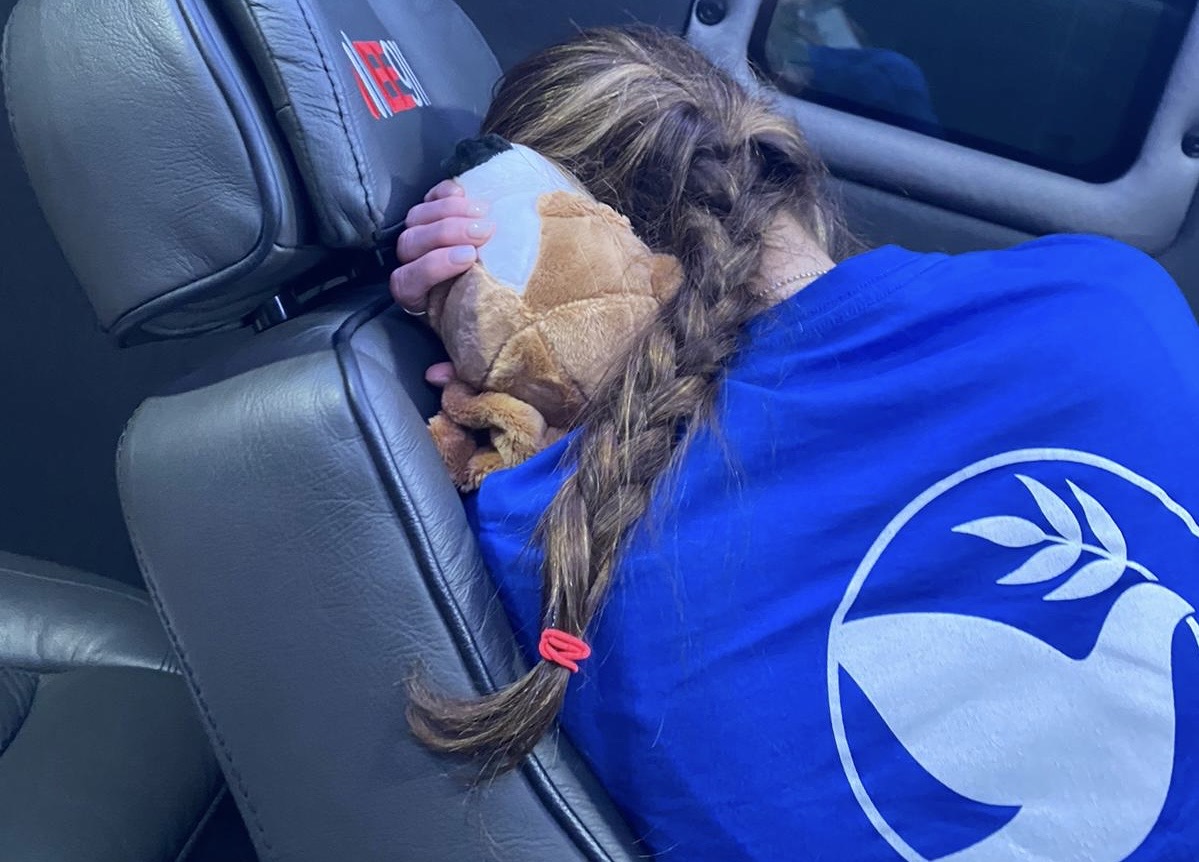
The counselors gave us a stuffed animal they used during therapy sessions, a dog with long arms that wrapped around you like a hug. I ended up with it wrapped around me on the drive back to Jerusalem, not realizing I needed comfort too as so many thoughts and emotions flooded my mind. I was haunted by what I saw at the Nova festival site. Walking through it, hearing explosions in the distance from the ongoing war, and thinking about that father and his anguish.
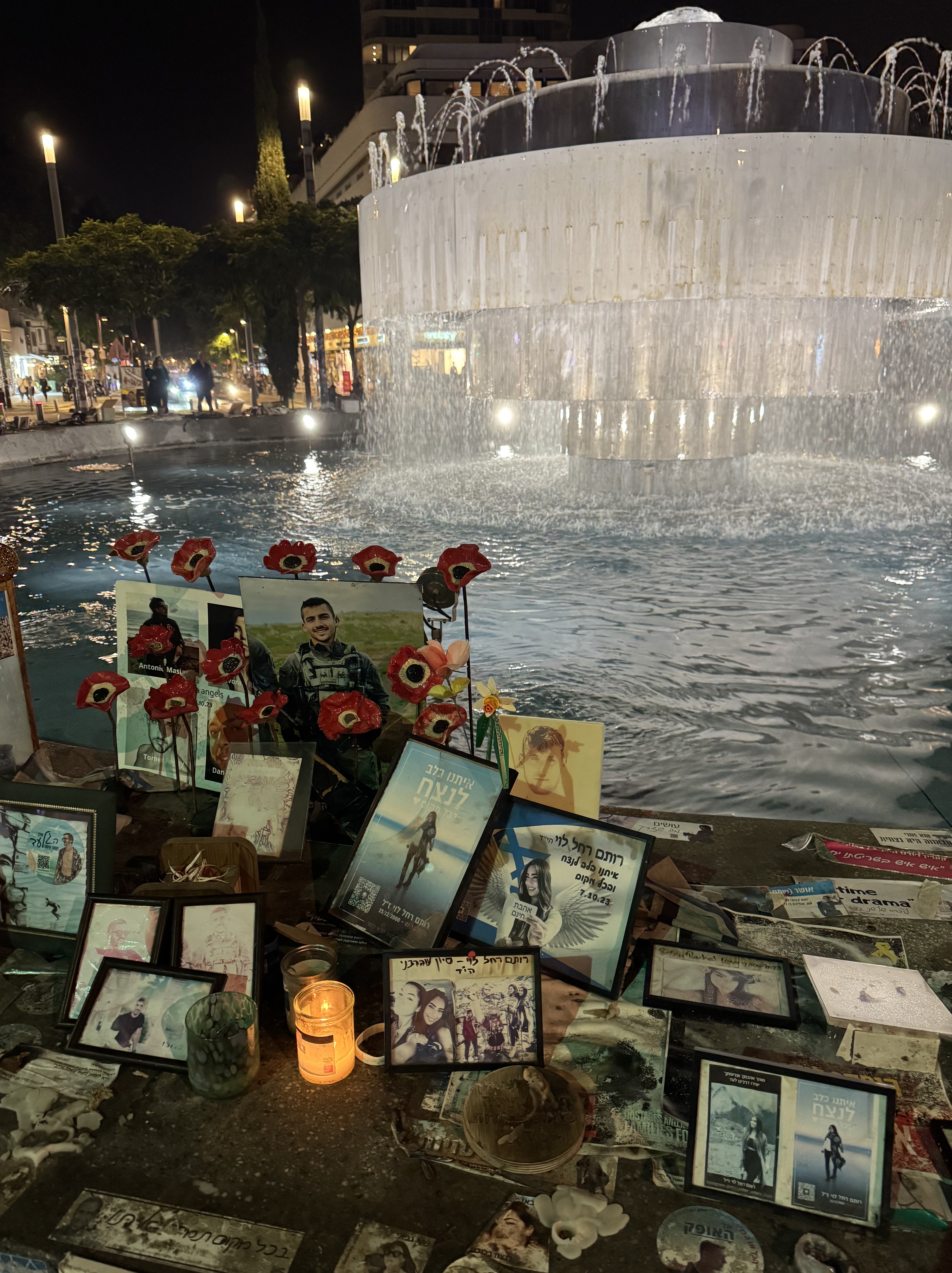
In Tel Aviv, where we visited him during a weekly rally in Hostage Square for families and supporters, they gave us dog tags that said in Hebrew and English: “Bring Them Home Now.” They also gave us wristbands from the Nova festival, the kind you wear when you go to those events. I wore so many in my youth and never imagined I’d be wearing one again in my fifties, but for such a different reason, as a gesture of solidarity.

I was in Israel with the International Fellowship of Christians and Jews for a week traveling the country to bring awareness not only about what happened on October 7th, but what continues to happen globally with the rise of antisemitism and the dangerous repercussions it has in the world.
Someone warned me upon returning to the States that maybe I shouldn’t wear the wristband or dog tags, that perhaps I shouldn’t draw attention, for my own safety. That cautionary advice made me understand that I absolutely needed to wear them, write about them, and talk about what I experienced, from my own perspective.
On Saturday, February 22nd, I woke up to the news I’d been praying for since returning from Israel. The father we met, Malki, his son Omer Shem Tov, was released after 505 days in hostage captivity. Tears streamed down my face as I watched Omer reunite with his mom and dad. I’m brought back to the Nova site and a recurring message I saw written everywhere.
“We will dance again.”
I hope Omer will DJ again — and that the music will heal us all.


A rose blooms in Northern Israel against the backdrop of war
 WOMcity