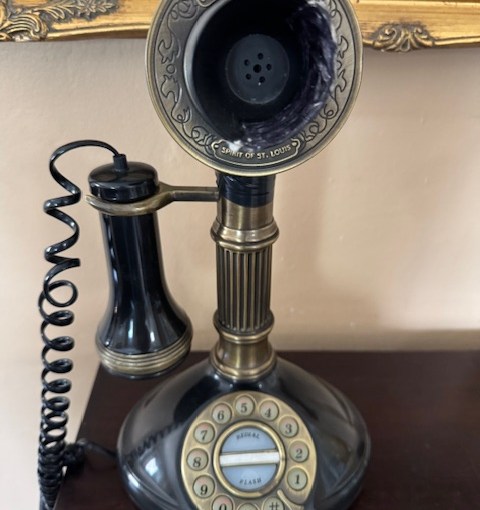
When I was in High School back in the eighties I volunteered at a crisis hotline for teenagers called Replace. It occupied a few rooms in a church and there was a production studio in the basement where I spent countless hours after school.
The handful of counselors that ran it were enthusiastic, kind, and positive adult influences. They created a welcoming environment for youth and even gave me keys to the church so I could work in the studio whenever I wanted. I took full advantage of that, sometimes pulling near all-nighters. We worked on video projects aimed at helping teens grapple with various issues, which was the mission of Replace.
The hotline operated a few days a week and we’d volunteer in shifts. There were only a couple phones and teens often worked in pairs so they could debrief after calls and support one another. When the phone didn’t ring, we’d do our homework or just hang out in the common area. There was always a counselor on duty in case a call escalated into something that required professional intervention (i.e. self-harm or suicide talk).
Two things prepared me to work at the hotline: their extensive training and my Catholic upbringing. The former took place after school for several months and resembled a psychology course. If I didn’t love video production so much, I likely would have been drawn to therapy work since I was fascinated by human psychology, but also really liked helping people.
My Catholic upbringing prepared me because of the lessons I was taught in Sunday school, including the Golden Rule principles of loving thy neighbor, doing unto others as you’d want done, etc. I was never taught that being gay was a sin. I know other Catholics were, but that wasn’t my experience.
If anything, my religious education taught me compassion, acceptance, and leading with kindness. It shaped my values much in the way my parent’s influence did too. I always had a protective nature for the underdogs in society and an awareness that some people were different, misunderstood, or just marched to the beat of their own drum.
Which is why, when I took a call one night and the person told me their body didn’t match their mind, I just listened. I didn’t know what being transgender meant in the eighties. I had only just learned about being gay. This wasn’t included in the training materials and I knew it required more knowledge than I could provide and I was upfront about that.
But he didn’t want knowledge, advice or resources. He just wanted someone his age to talk to, and I could do that. We ended up talking for over an hour. Back then, the term transgender wasn’t in the vernacular. This individual, born a biological male, referred to himself as a transexual and explained the difference between what that meant versus being a cross dresser or a drag queen, of which I had no familiarity.
There was no talk of preferred pronouns. He knew his biology was male and explained how his heart and mind didn’t align with that, an internal conflict that deeply troubled him. He wasn’t looking for affirmation or to change who he was — he just wanted to figure out how to exist as he was. He was scared, confused, and needed a friend. He called the hotline because he didn’t know what to do.
Truth is, I didn’t know what to do either.
But I wanted to help. I felt a tremendous responsibility, coupled with some anxiety since his issue was so far removed from my training. I had thought I was prepared to handle anything: substance abuse, bullying, divorce, peer pressure, sexuality, eating disorders, date rape/dating violence, you name it. But this topic was in an entirely different category and completely foreign to me.
Mental health was at the core of the hotline training and one of the first things we were taught was to commend anyone who called with having the courage to take the first step in seeking help. We frequently got hangups, so it was impressed upon us to make sure those critical opening seconds made the caller feel secure.
I repeated a phrase I’d been taught: “We go to the doctor every year for a physical, but our mind is part of our body so mental health should also be included in the checkup, but unfortunately it’s often overlooked. You’ve come to the right place. I’m here to listen, and hopefully help. My name is Ali.”
After that I just went off instinct. I also consulted with the counselors, who said we don’t need to have all the answers and it’s not really our job to provide them. Our role is to offer support, most of which just involves active listening. That took the pressure off a little, but I still wanted to make sure I provided this individual with something that would help him navigate his emotional distress.
Finding Community
Like most young people, my caller wanted to fit in, belong, and form human connections with others. He described feeling very alone in the world, isolated by fear that no one would understand him, that even he didn’t understand him. “Born broken” was how he saw himself.
I thought about how complicated his life must be and didn’t for a second believe he chose this for attention. Quite the opposite. He genuinely struggled and wished he could be in a different body. I didn’t think he was mentally ill, but I did think he was having a mental health crisis and suggested he seek professional help beyond just calling a teen hotline.
He agreed to do that, but asked if he could keep calling too. I didn’t have any regular callers, so the fact that he wanted to keep the lines of communication open with me felt like an accomplishment. I was a real counselor!
Back then, before the internet, before social media, finding community wasn’t easy for individuals living on the margins, and with AIDS raging there was a lot of fear associated with the gay community, much less someone like my caller. In fact, during that era the gay community itself did not necessarily embrace individuals like him.
We spoke numerous times after our initial call. He felt safe talking with me and I was happy he found comfort in our conversations, despite my lack of knowledge. We found common ground in other areas and sometimes didn’t even talk about his specific problem. For him, I think it was liberating to reveal his secret and not be judged – just two teenage girls talking about the stereotypical things teenage girls discuss.
I asked what he was interested in, favorite subjects at school, hobbies, music, and what he wanted to do in life. He was creative and loved art so I encouraged him to find outlets for that, much like I had done in the production studio and how my video camera was essentially another appendage of my body.
I described my favorite teacher, Mr. Z, who taught photography and how I learned to develop film and print photos in a darkroom. I admitted that sometimes I retreated there at school, often during lunch, when the outside world and my teenage angst felt overwhelming. I asked where he retreated to find a sense of calm. For him, it was drawing.
At the hotline we were strictly forbidden (and for good reason) from exchanging personal information or meeting our callers in real life. Establishing clear boundaries in any kind of therapy work is incredibly important, but I told him that had we met under different circumstances I could see us being friends.
While I couldn’t directly relate to what he was experiencing, I could sympathize with feeling uncomfortable in my own skin. Some of his body image insecurities resonated with me as a teenage girl going through puberty. In fact, I don’t know what teenager doesn’t experience some degree of body dysmorphia, even if it’s temporary or a short phase. Gender dysmorphia, on the other hand, is in an entirely different category and something I still needed to research and understand.
Girls Just Wanna Fit In
We talked about channeling our energy into things other than what we didn’t like about ourselves or couldn’t change. Back in the 80’s the media presented the ideal woman as skinny, tall, blonde with big boobs. The bigger the boobs (and hair) the better. I couldn’t control my height or A-cup, so I got a perm and dyed my hair with Sun-In. It wasn’t a good look, but I wanted to match the style trends.
What I didn’t know at the time was that I would look back on my dyed permed hair (ditto a regrettable tattoo) and not only laugh, but marvel over the cultural embrace of this terrible phase in fashion. But you couldn’t have told me as an 80’s teenager that obnoxious florescent colors, elbow pads, stirrup pants, an arm stacked with plastic watches and hair full of Aqua Net wasn’t cool. I would have rolled my eyes, called you out of touch, and turned up the volume on my boom box.
At a certain point I became drawn to goth, alternative music, and rave culture. For me, the whole scene was a creative form of self-expression, an outlet I embraced to exercise my own individuality. It was fun, liberating, and an exploration of identity. I still love the music genre, but a lot of the style now feels dated and no longer a symbol of originality through my now adult eyes. Kind of like when you see an aging hippie in bellbottoms, tie-die and fringe in the present day. They’re frozen in a time that has passed.
My High School boyfriend’s father was a plastic surgeon. He once joked that his fancy car was paid for by boob jobs. He never suggested I go that route, we were just sixteen, but there was an almost cavalier message being sent to young women that you can change your body and you will be happier once you do. It negatively impacted me and my friends, some more than others, resulting in eating disorders.
It also influenced how I interacted with the caller. On some level, I recognized his internal struggle with self-acceptance. Even though it was vastly different from my own, it involved feelings I could identify with in terms of being okay with who you are, exactly as you are.
A Four-Leaf Clover
During one of our last conversations I told him I didn’t think he was biologically broken, flawed, or something that needed to be fixed or altered. Instead, I saw a four-leaf clover, a rare anomaly in nature, which made him unique, not a freak. I cautioned him that not everyone would understand the things he shared with me — nor should he expect them to — but the ones that did? I assured him they’re out there too. “Be patient with the world, but especially with yourself. You are worthy of love and happiness, just the way you are.”
I didn’t know it at the time, but the four-leaf clover analogy would later become something I’d tell others just like him.
I sometimes wonder where he is today, how he’s living, who he’s loving, if he ever physically transitioned as an adult. I say physically because emotionally he always was who he was, it was just a matter of accepting himself. We called it his unique existence, something that set him apart, but not something that was bad or wrong. Just different. I also wondered if he changed his name and embraced the female pronoun, something he was not ready to do as a teenager for fear of not passing and being ridiculed.
Volunteering at the hotline had a big impact on me in High School, but it also prepared me for life post-college in New York City. I met a lot of individuals like my caller. Perhaps that’s why I developed a soft spot for them and volunteered at a homeless shelter for LGBT youth for nearly a decade after moving to NY. I wanted to be there for the kids that didn’t have anyone or were misunderstood.
Gender Activists
All of this brings me to the present moment in 2025. I’m concerned by what I see as the rise of gender “activist” ideology, which I think is hurting both the gay and trans community, particularly the youth. I chose the word “activist” intentionally, because it feels more like a movement with an agenda than a statistically accurate reality.
Suddenly, the percentage of young people identifying as transgender or nonbinary has increased three-fold. Arguments can be made that increased visibility and a more tolerant media have made coming out easier. When you factor in the internet, followed by social media — both of which provide a lens into alternative lifestyles that previously were only found in the back of independent bookstores or gay coffee shops in big cities — and then add the promise of community, it makes sense that young people questioning themselves feel more empowered to come out in this era versus when I was a teenager.
The problem? They’re not all coming out as gay. They’re coming out as queer, trans, non-binary and a whole plethora of identities that would make your head spin. And semantics matter.
In 2017, the number of cases of individuals diagnosed with gender dysphoria between the ages of six and seventeen in the U.S. was 15,172. Five years later, in 2021, that number spiked to 42,167. [source: Reuters]. Most closeted young gay people don’t struggle with gender dysphoria. They may struggle with body dysphoria, as do many teenagers, but the distinction is important because being uncomfortable with your body, especially during puberty, doesn’t mean you’re in the wrong body. But if you’re struggling with your sexuality, the idea of being the opposite gender might be an appealing denial loophole.
In 2007, there was only one transgender youth clinic in the U.S., located in Boston. By 2017, that number had risen to 41, followed by approximately 60 in 2022. [source: Stats for Gender] The cost of surgery can range anywhere from $3,000 to $50,000 or more, depending on the surgery.
It’s become an industry, but who is really benefiting? I did a deep dive researching how minors gain access to this kind of treatment. My babysitting and mininum wage job money certainly wouldn’t have been able to afford it, or even the money I made in my twenties. So how do you convince parents to pony up? You appeal to their base instinct of protecting their child.
There is inconclusive and even conflicting data suggesting a correlation between gender treatments and reduced suicide risk. But yet a common question parents are asked at gender clinics when faced with decisions about their child’s mental health is: “Do you want a dead son or a living daughter?”
Most parents just want their children to be happy, so to hear that from a medical professional is frightening, but it’s also manipulative because it presumes the only solution is the most extreme one. It also happens to be the one that requires a large sum of money.
Can I Get a Refund?
I started reading stories about de-transitioners and how they wished they’d had more talk therapy and mental health support versus the rushed sense of urgency by gender affirming clinics to correct a biological wrong. Even the word “affirming” implies only one outcome for the patient, when a more honest word would be “exploring.” Because sometimes the individual just needs mental health care, not hormones or invasive surgery.
Girls were asked questions like, “Do you feel uncomfortable in your body?” “Have you always been a tomboy?” And boys were asked, “Have you ever played with dolls or experimented with makeup?” “Do you reject stereotypical male things and prefer the company of girls?”
These are not layup questions for a gender confused person. This is spiking the ball on the gay community at their most vulnerable age, childhood and adolescence, when a person is figuring out who they are. Just because a girl rejects dresses and prefers softball over ballet doesn’t mean she’s gender confused. And just because a boy likes trying on mom’s heels or braiding Barbie’s hair doesn’t mean he’s gender confused.
Not everyone conforms with the traditional traits associated with their gender. We used to call individuals with blurred gender presentation androgynous. But now it seems androgyny has become synonymous with transgender or non-binary, which I think overlooks the gay community. A man can be femme and a woman can be butch without falling into either category, and yet we have legions of people acting outraged over misgendering.
What About “Them”?
I was at a work event at a theater in Milwaukee in 2023 and my coworker used the male pronoun when speaking with the stage manager. This individual, a male, was wearing jeans and a flannel. He had shoulder length hair, nail polish, and a gender neutral name. My coworker is a rock music guy covered head to toe in tattoos, and I’ve lived in NYC for decades, so seeing a guy with long hair and nail polish was hardly a trans tell for either of us.
I assumed he was a theater gay, and since he didn’t state otherwise, we were both caught off guard when accused of misgendering. It went something like this: “How dare you assume my gender! I never said I was a he!” Well, you never said you were a she either.
As a side note, if this individual was dressed ambiguously or had makeup on and my coworker and I weren’t sure, we would have respected the possibility and just referred to them by name. But it didn’t even occur to us because that was not the case in this scenario.
I put the onus on the other person to tell me upfront if it’s not obvious, and it certainly wasn’t obvious. Besides, it’s not my place to ask, because what if I’m wrong? That’s like asking a woman if she’s pregnant when she’s not. Awkward.
I also don’t start conversations with strangers asking how they identify. It’s none of my business and crosses a social boundary, in my opinion. If someone wants to volunteer that on their own, that’s on them, but it was never mentioned in our introductions so I don’t think the accusation of misgendering was fair.
My coworker could have rightly served the sass back, but he took the high road and apologized, saying it was an honest mistake. For my part, I extended an invitation to have drinks with us after the event, reinforcing we meant no harm. We exchanged numbers but they never showed up. Instead, I got a text the next day saying they didn’t feel safe and needed to protect their energy. So, the person who came in hot realized we weren’t transphobic and suddenly it wasn’t interesting anymore.
Without the controversy there was no conversation, which made me question this individuals intent all along. Some people feed off outrage and find offense where none exists. They go fishing for it but we didn’t take the bait. I told my coworker that I suspected this person couldn’t risk the stereotype they had of us being upended. There was no story otherwise.
It’s so much easier to blame external forces than it is to honestly engage another point of view or be open to realizing your preconcieved narrative might be wrong. It’s also intellectually lazy. In my own life, when I haven’t understood something (or someone) my inclination is to ask questions and be curious. An open mind finds more answers than a closed one, but more and more I’m finding closed minds on both political extremes.
The far left have gone too far down the gender rabbit hole (I’ll get to that in a moment) but some factions on the far right have too in denying that transgender people even exist or that they’re all mentally ill. They not only exist, but many lead quiet, normal, and healthy lives. In fact, a lot of them don’t like what they’re seeing with the gender activists either. It’s not serving them; only harming them more.
Identifying as a Tree
I believe that sexuality is on a spectrum, but I reject the notion that gender is, at least in terms of biology. Unless you’re intersex, you’re either born male or female. How you identify is not the same as the physical characteristics that determine your gender at birth, like sex organs and chromosomes.
If someone feels like both genders, or no gender at all, terms like gender fluid, two-spirit, or non-binary are used. But regardless of what terms you use to describe yourself, you have a birth gender. Trans men and women are born with the opposite chromosomes that align with their identity, but they are still biologically male or female.
A non-binary individual still has a birth gender, which is why I don’t embrace they/them pronouns. Confusing grammar aside, unless you fall into the rare intersex category, you still have a birth gender, whether you identify with it or not. That being said, Merriam-Webster added the term “they” to its dictionary in 2019.
I’ve heard the argument made for gender being on the spectrum because of how someone presents: a woman in masculine clothes and a short haircut, or a man wearing makeup while also sporting a beard. An individual may feel an association with both genders and vacillate between pronouns and presentation, and they may feel the term “they” best describes their ambiguity and personal style, but they still have an assigned biology. Asking someone to refer to you as “they” is asking them to overlook that reality.
That being said, I will always respect how anyone choses to identify (you do you), but I would just expect the same respect extended the opposite way. In other words, if you don’t want to be called he/she, but rather they/them or any of the others like xe/xer/xers, ze/hir/hirs, and fae/faer/faers, to name a few, I will probably just call you by your name to avoid confusion.
Forcing someone to adopt alternative pronouns, or worse, accusing them of misgendering when they (understandably) stumble, isn’t the way to win hearts and minds. It’s bullying and causes more harm to the community than help. You can’t demand acceptance. You need to earn it the old-fashioned way, by showing up in life as a good person.
Lead with who you are, not what you are. Simply declaring yourself as something and believing you’re in a protected class because of it, but then acting like horrible human being, will never advance the cause you claim to champion. Tolerance is a two-way street.
I have met people that very much look like the gender they were born but perfer to be reffered to another way. That’s fine. Again, you do you. But if you make a scene or act hostile when someone slips, you’ve lost my sympathy. Intent matters and if someone is trying to meet you where you’re at and makes a mistake, instead of excoriating them, recognize their efforts and give them grace. In other words, don’t be an asshole.
The Pretenders (not the band)
I believe transgender people exist, just not in the numbers we’re being told. I think there are a lot of what I call “trendy trans kids” that aren’t really trans. Some of them are cos-playing because it’s the zeitgeist of the moment. It reminds me of the hippies in the 60’s or the goth subculture of the 80’s – movements of rebellion, self-expression, and anti-establishment.
And just like the septum nose ring, many will outgrow it in the next five to ten years as they enter adulthood. I have two tattoos and the one I got in college I could do without now, but that’s just a tattoo. I’d wager a lot of money that by 2040 more than half of the trendy trans kids will be vanilla adults and look back on this era of their lives with amusement, perhaps even a little embarrassment, but hopefully not too much regret if they made permanent changes to their bodies. That’s the part that concerns me – the kids that got caught up in it all and made life alterting changes that can’t be undone.
Unlike the hippies and goths, the trans trend harms the gay community and real transgender individuals. It’s no surprise that with the rise of social media comes the desire among young people to be seen and stand out. Merely being LGBT is not avant-garde enough, hence the extensive add-ons to the acronym, like neopronouns, a subset of which includes noun-self pronouns.
If you’re not hip to the lingo, this means you can identify as anything, a tree, a kitten, you name it. It’s essentially become the Trojan horse for straight people to gain access to the club. Just identify as queer or non-binary, throw on a neopronoun, and you’re in!
I observed a lot of this while in Washington, DC at World Pride 2025. In fairness, I went on the last day after a downpour so perhaps my anecdotal crowd sample was skewed. But compared to NYC Pride of years past, of which I’ve attended many, it seemed there were more kinks and the “plus” part of the acronym on display versus your average run of the mill gay.
It’s Not a Choice
Remember in the 80s the whole “being gay is a choice” debate? What happens when all of these trendy trans kids de-transition or revert back to their original identity in the next decade or two? Since they’ve aligned themselves with the gay community, people with limited exposure or understanding of the gay community might say, “See, it’s a choice.”
I’ve never met a gay person who reversed course later in life. It isn’t a choice. Just like being straight isn’t a choice, or truly trans. I’m not saying it’s never happened in the history of the world, but in my experience I’ve never encountered it, and I’ve known a lot of gays!
I had a conversation with a late 20-something lesbian couple. One half presents masculine and the other feminine. The masculine girl explained how annoying it is whenever someone asks her pronouns, assuming she’s trans or non-binary simply because she’s butch.
Meanwhile, her girlfriend resents the implication that because she’s with someone who presents masculine that perhaps she’s confused, or worse (gasp) straight adjacent, which is a passive aggressive insult to the straight community created by gender activists.
Both women are simply gay. The butch one doesn’t want to be a guy and the femme one isn’t secretly straight, but the former admitted that had she been conditioned at a young age to question her gender merely because she felt more comfortable as a tomboy, she might have been swept up in the activist trans movement too.
A Message for Parents
Some of the most creative people I’ve met blur the lines of gender expression. They are beautiful kaleidoscopes of many things. This does not mean they’re transgender. Drag queens, for example, are performance artists. Their body is a canvas and they change like a chameleon, and then change back.
Most drag queens are flamboyant gay men that gravitated to female clothes and makeup as kids, drawn by the theatrics and drama of it all. But now, many of those same kids are being made to question if maybe they’re really just a woman. I’ll never forget one well-meaning mom describe her eight-year-old son singing his heart out while wearing a pair of her heels and how that was the moment she “knew” he was trans.
Instead of affirming the obvious, his love of singing, fashion and maybe even theater, she sought to affirm the not-so-obvious, his identity. My advice for parents who just want to do right by their kids: Love them. Don’t try to figure it out for them. As difficult as it is to see them suffer or experience confusion, accept that love is the only answer you’re equipped to provide. Love, love, love.
The Kids Aren’t Alright
The trendy trans movement has confused a generation of young gay people that are just trying to figure themselves out and find their place in the world. I read a book called “Gender Madness” written by Oli London, a gay man who went through this experience. He transitioned in his 20’s, only to de-transition once he learned to accept his four-leaf clover self.
Which brings me back to the question of choice. He didn’t choose to be gay, he always was. But he did choose to transition, believing he might be a woman, and then made the choice to transition back. As a teenager he hadn’t come to terms with being gay, so the idea of being a woman made liking guys easier. This is where I feel the trans activist movement does the gay community a disservice. They are not the same, nor are their numbers statistically representative, but they equate themselves.
We will find out in the years ahead once the data becomes available, just how many confused Gen Z gay youth embraced the possibility of being trans just so they didn’t have to face being gay. I even wonder if there will be a scandal on the level of the Sackler family when it comes to the gender clinics for minors. A lot of money is being made from people’s pain and confusion — and not everyone has the kids best interests at heart.
Even the rainbow flag has morphed into the trans flag under the guise of inclusion. But why combine the two? In some ways I feel like the gay community inadvertently fell for a sleight of hand. A lot of gay people are quick to defend anything trans-related because, to a certain degree, they relate to the struggles, which makes sense. But I don’t think the activist trans movement has helped them in terms of visibility or acceptance.
If anything, it’s hurt them. Support for gay people has dropped in recent years, a notable dip that I suspect is the result of their community being co-opted by fringe gender activists. The reason I keep referring to them as activists is because I think that’s different from a community. An activist movement typically has an agenda, whereas a community is a group that offers safe haven. The gays opened their arms and, in some ways, got stabbed in the back during the embrace. And real trans individuals — not the activist interlopers — were also betrayed, because the movement didn’t protect them either.
There are real trans kids suffering from gender dysphoria that need help. There are also gay kids suffering. I think back to my hotline caller and how I was so ill-equipped to handle his issue, but yet we managed to connect on a human level and talk about who he was as a whole, not just the gender confused teenager. In fact, that problem was secondary to most of our conversations.
Instead of focusing on what he wasn’t, a biological female, we focused on who he was as an individual. My instincts told me he needed to work on that relationship first anyway. We didn’t talk about surgery or puberty blockers. We focused on feelings and navigating complicated emotions around self-love and acceptance. I’m sure I probably quoted Whitney Houston’s lyrics to the “Greatest Love of All” because I was working on that relationship too, as most teenagers are.
Which is why it concerns me that medical professionals at gender clinics for minors are introducing blockers and surgical options before any substantial mental health therapy has taken place. They claim there are extensive evaluations to determine a child’s degree gender dysphoria and what interventions and treatment can be done, but in case after case from those who later de-transitioned they’re saying the same thing: NOT ENOUGH THERAPY.
Mental health is complicated. Adolescent mental health is really complicated. Hormones, physical changes, sexuality, peer pressure, the list is endless. Some of the saddest stories of de-transitioners revolved around finding a home in the queer community, a sense of finally belonging somewhere, only to be ostracized or called a traitor after de-transitioning.
When Did It Get So Mean?
Two moments stood out to me in the past year. The first, a series of protests in NYC. I remember a particular one outside a pride event at Chelsea Piers. The group, which carried signs like “Gays for Gaza” and “Lesbians for Liberation,” were protesting gay icon Billy Porter. I don’t know what Billy did to become the focus of their ire, but as I stood there and listened, I learned that they were also pro-Marxist, anti-Israel, anti-capitalist, and anti-America.
They screamed into bullhorns and sent the message that they were down for violence if you didn’t agree with them. I watched from the sidewalk, trying to understand their point of view, but they were so angry and hateful that I couldn’t help but wonder what normal gays thought of all this? By normal gays, I mean not unhinged activist types.
Set aside the amount of propaganda you’d have to consume to think that Homos for Hamas could ever be a thing, these protesters were completely consumed in their hatred of America. It was quite obvious none of them had ever lived in the Middle East as an openly gay person.
This is not to say America is perfect or hasn’t had a shameful past with respect to racism, homophobia and the treatment of women and minorities. There are plenty of criticisms worthy of debate and conversation, just as there are with other countries, but to not recognize the progress America has made or have an iota of historical perspective is ignorant. Gay comedian Daniel-Ryan Spaulding does a good job pointing this out, mixing his brand of humor with education.
Another gay content creator I follow is Brad Polumbo, host of the Brad vs. Everyone podcast. His content takes a level-headed approach to the issues of the day from an independent perspective and demonstrates that you can be kind and thoughtful in disagreement. If you want to persuade someone to your point of view, winning their hearts and minds is a lot more effective than name calling, trolling and just generally being a nasty person.
A lot of the activist types lead with anger and their own form of bigotry and don’t even realize it. Anyone who embeds at one of their meetings or protests, as I have, recognizes pretty quickly how they use intimidation tactics and threats of ostracization and hummilation if you don’t tow the line. For someone who is lost and desperately seeking community, it’s easy to see how they become entangled.
I find it revealing how de-transitioners are treated by the very people who initially welcomed them with open arms. It reminds me a little of how the BLM movement treated anyone who questioned their cause or approach. Healthy debate should exist in any group, otherwise the “why” gets shouted down and you cease to advance your cause or earn converts.
Biological Men in Women’s Sports
The second moment that stood out to me was watching the madness unfold around women’s sports and Title IX. I got to know Riley Gaines, the former University of Kentucky swimmer that tied with trans swimmer Lia Thomas during the NCAA women’s championships, an event that catapulted the issue into the spotlight, with similar stories to follow.
When Riley got physically assaulted at San Francisco State University for expressing the point of view that competitive women’s sports should be reserved for biological women, that was revealing. She wasn’t saying that trans people shouldn’t exist or play sports. She was specifically defending Title IX. Real trans individuals, including Caitlyn Jenner, knew exactly what she meant, but the activist trans movement created their own narrative, calling her a bigot and transphobic.
Riley isn’t transphobic. That word gets tossed around too much, which waters it down when real transphobia occurs. Anyone who labels her that is intellectually lazy because her position couldn’t be more clear. Live your life however you want, play intramural sports, that’s not the issue. The issue is taking space away from biological women in competitive sports who don’t have the same physical advantages as biological men. You can take estrogen, hormone blockers, even have surgery, but your physicality still puts you at an unfair advantage. That is the science.
As a little girl, I wanted to be a prima ballerina, but I was born with the wrong type of feet. My dance instructor told me it didn’t mean I couldn’t dance; it just meant I wouldn’t be at Lincoln Center. She was honest. I went on to join the dance club at school, because I loved to dance. In other words, the feet I was born with didn’t stop me from dancing.
I wish more coaches were like my instructor and told their trans athletes to play the sport they love as the person they are, but understand and respect the limits and why they are there. And more importantly, have the grace to accept you can’t always have everything in life, including breaking records in women’s sports when your biology, regardless of how you identify, gives you an unfair advantage. This is not a transphobic position.
Where Are All the Feminists?
When you allow trans athletes to compete in championships and break records you water down the reason Title IX was created in the first place. Otherwise we wouldn’t have separated men and women’s categories. Those arguing “But it’s only a small number” also say when it comes to other things, “Even if only one person is impacted by X that’s one too many.” You can’t have it both ways.
But it’s actually not a small number. A UN study cited in 2024 that trans athletes won nearly 900 medals across more than 400 competitions globally. The source for this study was obtained by The National News Desk. Many of those wins didn’t make it into the news cycle, but that doesn’t mean they didn’t happen. So for all the people saying, “I can’t even count on one hand the number of times a trans athlete won a competition” here you go:
1. CeCé Telfer (track & field): Won the 2019 NCAA Division II women’s national championship in the 400-meter hurdles.
2. Veronica Garcia (track & field): Won back-to-back Washington state high school championships in the 400-meter run.
3. Aayden Gallagher (track & field): Won an Oregon high school girls’ state championship in the 200-meter race.
4. JayCee Cooper (powerlifting): Won the 2019 women’s national championship for bench press in the super heavyweight division.
5. Sadie Schreiner (track & field): Won the 2024 Atlantic Region Outdoor 200-meter title at Rochester Institute of Technology.
I could also list your other hand and both feet, but I think you get the point. Arguing that it doesn’t happen very often as a means to justify it happening at all accepts the premise that there’s no difference between the biology of men and women.
Studies like the one done in Sports Medicine in 2020 suggest that while testosterone suppression reduces muscle mass and strength in trans women (biological men at birth) it doesn’t fully eliminate differences compared to biological women, even after up to three years of hormone replacement therapy (HRT). Conversely, trans men (biological women at birth) may gain muscle mass and strength, but their skeletal structure, like hip width, cannot be changed.
The very basis for Title IX, enacted in 1972 as part of the U.S. Education Amendments, aimed to ensure equal opportunities for women and girls in education, a large part of that including sports. It sought to eliminate sex-based discrimination and address historical inequities.
People forget that the 70’s marked a turning point for a lot of women in America. Things like the Equal Credit Opportunity Act was passed (ECOA), prior to which many banks and credit card issuers required women to have a male co-signer, like a husband or father.
When I was getting my driver’s license in the late 80’s my instructor suggested to my mom that our family consider getting an automatic (we only drove standard) because women had an easier time with them. She pretty much told him where he could put the stick shift.
But I digress, the point being that women have fought sexism and misogyny since the beginning of time, so it makes sense that some feminists are sensitive to the plight of trans women. In some ways, they see their own battles. Ditto gays. But I would argue these are very different battles, and if not properly addressed the repercussions will be damaging for everyone, especially trans people.
There are a lot of people that don’t understand transgenderism because they’ve never encountered it, but they do understand the differences between men and women, particularly when it comes to size and strength. Trying to tell them there’s no difference and calling them intolerant for seeing it differently is a losing proposition.
You can’t force acceptance. That’s not how you win hearts and minds. Violating Title IX hurts both sides. Women are robbed of fair competition and trans individuals are viewed negatively by the public. This is why a lot of trans people don’t support overturning it either. They don’t see it as a convincing argument, because it isn’t.
The majority of trans people just want to be left alone and quietly live their lives. By making the sports issue front and center and demanding trans inclusion, the activists end up creating an environment for more harassment and bigotry directed towards trans people, not less. In other words, the activists are the problem.
Autogynephilia or Trans?
I personally have a soft spot for trans people, ever since my hotline caller in High School, but that’s my unique experience. Another person’s experience might be the parent of a daughter who trained her whole life to place in a competition only to lose by seconds to a biological male. Or a young girl being caught off guard in a locker room while changing.
I live in NYC and have shared locker rooms with trans individuals. It never bothered me because they were always discrete and used the private changing areas or bathroom stalls. In general, real trans people just want to blend in and would be mortified to stand out in a locker room environment.
Think about it from a common sense perspective. When you have that degree of gender dysphoria the last thing you want to do is highlight or reveal that which doesn’t align with your identity. Most trans people want to pass, not put a spotlight on their birth gender.
There was a high profile case at a Los Angeles gym involving a woman, Tish Hyman, who had a confrontation in the locker room with a biological male who was in the process of transitioning. This individual goes by the name Alexis Black and registered at the gym as a female. Black had been taking hormones for less than a year and still very much presented male.
Hyman claims Black was traipsing around the locker room with male genitls exposed and harrassing women. Black feverntly denies it and insists everything was covered. Hyman complained to gym management, but CA law states that anyone can use the public facilities of the gender they identify as, regardless if they’ve transitioned.
Even if Hyman’s claims were untrue, and no male anatomy was on display, simply having a male in the locker room would be alarming for most women. Hyman said at first she thought Black was a maintenance worker and was caught off-guard because she was completely nude. They got into a heated verbal exchange that resulted in Hyman having her gym membership revoked.
Hyman made it clear she has nothing against trans people, herself being a black lesbian, but said Black crossed a line and wasn’t respecting women. I’m modest and don’t like being naked around anyone other than my husband. I’m not a fan of nude co-ed saunas and can understand why Black’s presence in the locker room would be startling, even if no genitals were exposed.
There is a condition known as autogynephilia, which is defined as a male’s propensity to be sexually aroused by the thought of himself as a female. This concept was first introduced by psychologist Ray Blanchard in the 80’s. While some individuals with autogynephilia may experience gender dysphoria, not all do. The key difference is the sexual arousal aspect in autogynephilia. This is what sets it apart from merely being transgender.
Hyman claimed that even under the towel it was obvious to her that Black’s parts were, to put it bluntly, at attention. It should also be noted that Black was previously married to a woman that he severely beat and has since adopted her first name, Alexis, as his own. To say there’s some other disturbing pathology going on here would be a fair assessement.
Either way, I come down on the side of Tish Hyman. I’m not suggesting Black isn’t trans or has autogynephilia, I’m not a therapist, but having such loose laws does create loopholes that can be abused or open the door to predatory behavior. I think gyms should have stricter policies and create alternative spaces for trans people so that everybody feels safe on all sides of the issue.
Society has come a long way since my teen hotline days and there has been a lot of progress, but sometimes cultural pendulums can swing too far in one direction. I feel like Covid and 2020 was that direction, on a number of levels, and now the pendulum is swinging back and people are rejecting some of the woke concepts foisted upon them during the pandemic.
The Golden Rule
All the trans people I’ve known in my life, and there’s been quite a few both personally and professionally, want the same thing: Acceptance. Kindness. Tolerance. Compassion. Respect. Dignity. Courtesy. Understanding. This is why activists who demand inclusion in sports or radicals on the other side who deny their existence, cause society to lose because no one wins at either end of that spectrum.
My husband and I were dining at an upscale restaurant in New York City. White tablecloths, dress code, a fancy pants type of place. One of the employees was trans. I clocked it; my husband didn’t. She was charming and classy and we chatted with her for a bit. I didn’t tell my husband until after we left that she was trans, because it didn’t matter. And I only pointed it out because she was living her authentic life, quietly. For so many people that is the goal, to live authentically and in peace.
About ten years ago I was shoe shopping at Nordstrom Rack in Union Square. I noticed a young trans woman struggling to force her size 12 feet into a pair of size eight heels. I gently told her that she would regret downsizing and to just try the larger size and own them.
I said, “Trust me, I’ve tried going smaller too and ended up covered in Band Aids the next day.” She knew that I knew and that I didn’t care. She also knew that I was letting her know she belonged in that space, in the women’s shoe section, and I was offering a hand.
We started talking about shoes, styles, and jokingly lamented the pain women endure achieving certain looks. She eventually put on the larger shoes and confidently strutted the aisle. “See, don’t those feel better?” I asked. She admitted they did and decided to go with the larger pair, even seemed relieved.
It was at that point she revealed having recently transitioned and these were her first pair of heels. Without hesitation I took them and walked to the register, along with the pair I was buying. She rushed to put on her original shoes and catch up with me. The cashier looked down curiously at the size 12 and 6.5, but politely rung me up and didn’t say a word when the trans woman approached.
As I handed her the shoes I noticed her eyes watering. She thanked me for the unexpected purchase and said it was unnecessary. I told her I wanted her first experience of buying women’s shoes to be a positive one. At least that’s what I said out loud. The part I didn’t say out loud was that there will be many unpleasant experiences too, and this gesture was a counterweight that she will hopefully remember in those moments.
In the end I think that’s the best we can do for humanity. Be someone’s positive experience. Make a lasting impression. Show up in life leading with kindness. Take the time to learn about people you don’t understand or agree with, on all sides. Respect differences and embrace diversity of thought.
These are the things I learned at Catholic Sunday school. “Do unto others as you would have them do unto you.”
Because we’re only here for a short time.
 WOMcity